Whispers

StreetCar250sqThe Little Theatre of Owatonna is playing “A Streetcar Named Desire.” I have been volunteering on the costume team. A couple of the actors have quick changes that we are helping with and changing areas have been setup backstage. Backstage is dark and quiet. We use flashlights to see costumes and props. If we need to communicate, it is done in  whispers.

I was struggling to hear my co-costumers in the dark. Due to my hearing loss, I have become accustomed to facing a person and looking at them when they are talking to me. Although I feel that the hearing I have with my cochlear implants is pretty great, whispering in the dark is a challenge.

At the dress rehearsal as we were figuring out how we wanted to help the actors and where we needed to be, I found myself in a pitch black corner. I heard co-costumer, Norma, whisper to me but had no idea what she said. She whispered louder. I still didn’t get it. On Norma’s third try, I finally got that she was telling me the corner was too small for two and she was going to go to stage left. While I stood in the corner waiting for the next move, I wondered to myself, “How am I going to communicate back here?”

Later that evening, Norma and I were working together behind the scenes stage left. The area was dark, but not so black you couldn’t see anything; however, reading lips was not an option. Norma whispered something to me and I happened to lean in allowing her to whisper right next to my left side processor T-mic microphone. Wallah! I was able to understand her whispers.

It was always hard for me to understand whispers. I choose the word “understand” because I could hear the hushed sounds of a whisper, but I could not comprehend the words being said.

In the history of testing people’s hearing, whispering was used as a tool for assessment. My very first Ear, Nose and Throat doctor that I saw for a hearing assessment tested me with whispering. In the exam room, he stood in the corner, facing away from me and whispered numbers. I was to repeat the numbers back to him. I was sitting on the exam table and my mother was sitting nearby in a chair.  When I looked at her during this test, her expression told me that I was not getting the numbers right. At the moment she realized I was looking at her, she forced a a smile.

For many years I avoided situations where I would need to communicate in the dark or with whispers. If someone did try to communicate with me via whispers, they would often get the fake out response – a smile and a nod, or if I could see their face, a reflection of the emotion I thought I was seeing in them.

cropped-earheart Now I hear with my bionic ears and I’m conquering my hearing fears. Whisper to me – on the left side – into my T-mic microphone.

UltraZoom

3a76c-meow2smallDid you know that a cat can rotate their ears 180 degrees to find the  source of the tiniest squeaks and rustles? There have been three cats that have been a part of my life. The latest, Elvis, was a long hair domestic. A beautiful male cat. I found it fascinating to watch him rotate his ears toward the sound of my voice versus turning to look at me.
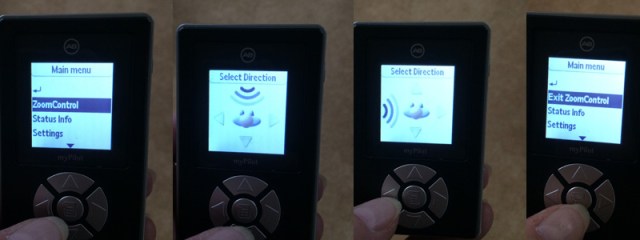
I don’t know what inspired the engineers that developed what is called Ultrazoom in my hearing system, but it emulates what a cat can do with their ears. Ultrazoom allows me to focus my hearing system in a specific direction.

On a recent road trip I worked at being more proactive in the use of the wonderful extras my hearing system provides for me. There were times on our trip when I was sitting in the back seat of the vehicle. I turned on my UltraZoom to enhance the sound in front of me. This setting also shut down the background noise of the vehicle and did a great job of picking up Paul’s, my husband, and Jana’s, my daughter, conversation in the front seat. It was wonderful to be able to hear and participate in the discussion.

When we stopped at a restaurant, I forgot I had this setting on. We chose to eat on the patio and after a bit I realized I could hear Paul and Jana pretty well and I remembered that I had UltraZoom front facing microphones still on.

I have also used the left side focus when traveling as a passenger in the car to enhance conversation with the driver. In a party situation it works great when trying to visit with one or two people. I also checked it out in our local theater when the director made a opening statement without the use of a microphone. Setting my bionic ears directionally towards the stage I was able to get most of what she was saying. It is pretty amazing that with MyPilot (remote control) in the palm of my hand and the touch of a button, I can rotate my ears like a cat.

Zoomcontrol

Hearing Better

A few years ago when my family was coming to understand the true extent of the success of my hearing with cochlear implants, my daughter shared a realization with me. She said, “Mom, my sisters and I were talking and we came to realize that as you get older, your hearing will keep getting better and dad’s will get worse.” We laughed.

Unfortunately age-related hearing loss is a pretty common issue. I remember when I got my first pair of hearing aids I did not want to be lumped in with old people. I was 28. When you want to hear better, you get over feelings like that, or bury them somewhere and then cover the hearing aids with your hair.

My first pair of hearing aids helped some – but not in a life changing way. I relied greatly on lip reading to understand speech. My family felt they helped. Many times when trying to converse with me, I heard (or saw) my child say to me, “Mom – do you have your hearing aids in?” Usually I did – but with the extent of the progressiveness of my loss, we did not know exactly when that prescription stopped helping. With each new pair of hearing aids, approximately every three years, the prescription was stronger.

Hearing aids can be life changing for some. They help many people with moderate hearing loss hear sounds they have forgotten or may never have heard. Not too long ago I met a young woman whose experience with getting hearing aids was like that. It was inspiring to listen to her share her joy in hearing. Hearing aids gave to her what cochlear implants accomplished for me – the delivery of sound needed to comprehend speech and recognize environmental noises.

Me and My DadRecently I watched my dad recover sound with hearing aids. With age-related hearing loss, he graciously accepted that it is time for some assistance. He admitted to hearing some things he had been missing. Gradual hearing loss, from whatever cause and at any stage in life, fades a person into a quieter world. Hearing aids and cochlear implants give back sounds long forgotten and sometimes surprising to hear again. It is a noisy world and it can be hard to rejoin it.

Yes – my daughters are right. As cochlear implant technology continues to evolve and my brain can still figure out how to use the technology, my hearing keeps getting better. For age-related hearing loss, technology offers a lot for those willing to use it. For most, at all levels of hearing loss, there is hope.

Technical Double Feature

Windblock

Several times over the summer I said to myself, I need to blog about this when I get home! What am I referring to? Windblock! What is Windblock? WindBlock is a strategy that reduces wind noise in my cochlear implant to improve my listening experience in windy conditions.

This is a recently added technology to my cochlear implant hearing system that I didn’t really appreciate until I had the opportunity to enjoy the benefits. There were two different environments where I really noticed the difference this summer.

lakesceneThe first was when Paul and I were taking a boat ride in our fishing boat. I was comfortably leaning back in my seat enjoying the scenery when the thought went through my head, “This is great. There is something different. Why am I enjoying this more?” As the wind breezed across my face and blew my hair back, it finally dawned on me, it sounded different! Then I remembered the “windblock.” I smiled to myself and prayed a “thank-you.”

The second environment was on the golf course. We were out with friends on a slightly breezy day. I haven’t golfed much this summer but on that day, I noticed I was enjoying being on the golf course more than I had in the past when it is windy. I was also better able to understand conversation. Once again I thought, “What is different today?” Then I remembered, “Oh Yeah! Windblock!”

Activate your T-Coil and be ready!

When I found out our local theatre, Little Theatre of Owatonna, was putting in a new sound system with a hearing loop I was pretty excited. I have experienced using my T-coil setting in a looped environment and I knew it would certainly make going to the theatre a joy again. Since I had been to a new audiologist and had some adjustments made to my mappings, I decided I better check the documentation to make sure my T-coil was turned on in one of the programs. Oops! We missed it. I was glad I checked and had enough time to see my audiologist to get my T-coil turned on so I would be ready for the first production using the new sound system.

What is a hearing loop? A hearing loop is a wire that circles a room and is connected to a sound system. The loop transmits the sound electromagnetically. A hearing loop sends sound from the system microphones directly  to people wearing hearing aids or cochlear implants with a T-coil turned on.

hearinglooplogo1I attended the play that was showing there this weekend and was able to use my T-coil setting. It was great to be able to hear the dialogue and the music clearly with the flip of a switch and not having to wear a special headset or some appliance around my neck.

In my community there are now two places that I know of with hearing loop sound systems. The first is the Gainey meeting room at the library and now also the Little Theatre of Owatonna (LTO). I look forward to enjoying many more plays and musicals at the LTO theatre! With my T-coil activated – I’m ready!

A Punch of Reality

A Few Minutes of Bad, A Lifetime of Good

I don’t hear all the time. When I do hear, when my cochlear implant processors are on, I hear quite well. In fact, I think I do so well that my deafness is forgotten by me as well as others. This can lead to a long stretch of some pretty comfortable living. Routines develop, communication patterns are set and we live our lives – and then something will happen that serves as a reminder of what is.

My nights are silent. The very first part of my day is silent. After my hair is dry and styled I put on my processors and the hearing part of my day begins. Once in a while, something or somebody needs my attention before I’m ready to hear. When this happens I get a big dose of in your face reminder that “I am deaf.”

This morning after my shower but before I had dried my hair, my husband popped his head in and handed me my phone. I had some texts that I read, but they were not the messages he needed me to see. He motioned for me to put my processors on and I reminded him my hair was wet. I could see he was frustrated as he quickly left the room. I said, “Fine,” and headed to my nightstand to put an ear on. Before I got it connected he came back with a hastily scribbled note telling me my daughter would call in about ten minutes. He was anxious to get back to the office. I was left feeling like I had just been punched.

I was reminded of something Rush Limbaugh said when he was finally ready to talk about his hearing loss and cochlear implants. He said, “You know, losing your hearing, having a hearing loss, that’s the only disability that makes people mad at you. People don’t get mad at people that can’t see. They don’t get mad at people that can’t walk. They don’t get mad at people that can’t taste or smell anything. But you get mad at people that can’t hear cause you can’t relate to it. You think if the person would just listen better, or pay more attention, that they’d be able to hear. And it doesn’t work that way. When you can’t hear, you can’t hear.” I remember when I read this transcript the first time. First, I was thrilled that Rush Limbaugh was finally sharing his experience and second, he absolutely nailed it with his observation of others showing anger/frustration with a deaf/HOH person.

I see more than what I believe a lot of people realize. From a lifetime of experience compensating for hearing loss, I read body language like I read a book and I don’t miss much. I could “see” my husbands frustration. I allowed his reaction to affect me and I was feeling bad; however, through self-talk I moved myself to a better place. I didn’t want to start my day in a negative mental state. I thought, “I have been here so many times before, I can pull myself from this place.”

I started thinking through my catalog of positives. One of the greatest positives is that I’m am married to a really caring and loving man. So we had a few minutes of bad this morning, but we have had a lifetime of loving and supporting each other. More times than I can count, he carried us through when my hearing loss created hurdles for me and I didn’t always have the tools or the energy to get over them. For example, handling all the phone calls during the years when I couldn’t successfully use the phone with strangers.

No, it is not the last time I will feel the punch of my reality, but the amount of time I allow negative feelings as a reaction to something or somebody is shrinking. Perusing positive thoughts and having had the opportunity to share my feelings I am back on track to feeling good. I’m getting better and faster at replacing the punched-in-the-gut feeling with happiness and peace and I am grateful, so grateful that these tools can be learned.

Jury Duty

gavel-2-1236453-1599x1063In November of 2015 I received notice that I was being called to jury duty starting December 1st. I was surprised to receive this notification because I thought my name had been removed from the rolls. About twenty years ago, when I was a hearing aid user and relied on lip reading to communicate, my doctor had written a letter for me describing my hearing loss to give the courts that would excuse me from jury duty. Even though I wore hearing aids, I could not understand what was being said without the visual cues of lip reading. Hearing aids delivered more sound, but did nothing to aid with comprehension and understanding of speech. Since getting cochlear implants, all of that has changed dramatically.

I have had my cochlear implants for many years now and function as well as most hearing people in my generation. Upon reading the letter calling me to jury duty, I felt kind of excited at the thought of being able to perform my civic duty just like everyone else. Instead of assuming I couldn’t do this because of my bionic hearing, I decided to call the jury hotline and tell them my issue and see what they had to say. The court informed me that they had special headsets to assist with hearing. This made me feel more comfortable knowing they do all they can to assist with hearing issues. I have used headsets over my behind the ear processors that look like a hearing aid and that has a microphone right in front of the ear canal. I thought that if I had trouble hearing I could try the headset option. I decided I did not need to get another letter to be excused. I could do this (maybe).

The first time I had to go down to the courthouse, I asked the court administrator if the court room was looped. A loop system would provide me with the best hearing option available to me. Looping brings the sound from a sound system directly to any hearing aid or cochlear implant processor that has a telecoil. The sound from these systems is great and can be likened to a hearing person wearing earbuds or a headset for listening. Unfortunately she said it was not. I have participated in some testing of areas looped for the hearing impaired as well as attending a conference in a looped convention hall. I hope someday all courtrooms will be looped. To learn more about looping, click here.

It was not until the very last week of my three months of jury service that I actually made it into the court room. In the court room I found that I could hear pretty well. I began to relax as I discovered that I could hear as well if not better than one of the lawyers. There were microphones in front of the judge and lawyers as well as the witnesses and when people spoke into them properly I could hear quite well. I also discovered that some adjustments made with myPilot (remote control) to my hearing processors gave me the volume I needed and softened the background noise that comes from high ceiling echoes and air systems. Even though I watched the proceedings intently, I definitely heard and understood speech without lip reading. During closing arguments there were times when I deliberately looked down and just listened to what counsel was saying. Sometimes body language is more distracting from, than contributing to, the communication.

I did it! I sat on a jury and heard a criminal case with fellow citizens. Each time I am able to do something that I couldn’t do before cochlear implants, I am thrilled. I smile to myself and feel internal joy. Should I be summoned for duty again, it feels great to know that I can be a juror.

Embracing the Silence

I like to hear. As a cochlear implant user, I wear my processors for most all of my awake hours. When I fly, I usually change to a map (settings on my processors) that has ClearVoice medium to block out some of the background noise. This is enough to keep me comfortable on flights under five hours.

Recently, I flew from Atlanta, GA to Johannesburg, South Africa. This is a flight that takes more than 15 hours. Not wanting to miss announcements or service from the flight attendants, I wore my processors for most of the flight. I also used my compilot (a device that streams sound directly to my cochlear implant processors like bluetooth streams to headsets) to hear the television shows and movies that I watched. A few were captioned, but not all.

My cochlear implants give me digital impulses that my brain has learned to decipher versus sound waves that people with natural hearing perceive. The sound I hear is just like what I heard when I had near normal hearing. Throughout this excursion from my home in Minnesota to Johannesburg, South Africa, I kept my processors on to hear the world around me, my husband, my daughter and all service people I came in contact with.

It was a long trip and all of us were tired when we arrived in Johannesburg. After supper with our hosts, I was looking forward to some quiet and a good night of rest. Sometimes when I take my processors off and slip into complete silence, I can feel my body relax with an intense relief as sound is removed from my existence. This was a sensation I relished that night as I prepared for bed.

Waking in the morning, I felt refreshed and ready to explore and enjoy my South African experience, hearing and all. The two weeks flew by and I saw and heard many great things. One of the hearing highlights was the sound of the bird known as the “Go Away Bird.” Also known as grey lourie, this bird earned its nickname because its call sounds like it is saying, “Go Away.” Although I could not see the bird, I heard it clearly and it really does sound like it is saying, “Go Away.” This was a very exciting moment for me. I love hearing any and all birds. Probably because I did not hear them at all for many years.

EarHeartWhen it was time to fly home I thought about and remembered how exhausting a lot of hours in an airplane can be with the constant drone of the engines. My daughter, who also travels often, uses Bose noise canceling earbuds. She told me that blocking out the background noise when she travels makes her much more comfortable and relaxed. I decided to remove my processors for most of the flight.

Wow! What a difference that made in how I felt when we arrived home. I did not experience the buzzing exhaustion that comes with hearing constant noise for hours on end. As much as I love to hear and be a part of the hearing world, there are times when it is good to embrace the silence.

My Aqua Case

My Aqua Case kit arrived at he cabin at the beginning of the week of our vacation. There were so many activities to participate in that I didn’t rush to put it together and hurry into the water. I wanted to read all the instructions, charge the new battery and make sure that I did everything just right. A couple of days passed before I was ready to sit down with the system, put it together and try it out.

We had great weather. The lake was a nice swimming temperature and the kids were doing water activities every day. It was time to get out there and join them. Setting up my stronger left ear with aqua mic and my Naida safely enclosed in the Aqua Case, I clipped it to my swim suit and headed for a kayak. I don’t know why – but I was feeling a little apprehensive about actually swimming and getting my head wet.

Family lake activities

After being on the water in a kayak or floating on a blow up chair, I finally found the courage to go all in. Taking a few breast strokes off the sand bar,  I put my head under water and heard the bubbles. I hadn’t heard water like that for a very long time. It was great to have sound while enjoying a favorite family activity.

With the fear of falling into the water removed and being able to hear coaching and instruction from others, I got out on the paddle board and finally mastered it. Last year I didn’t like it, but that had more to do with having to go out in silence.

Glenice on Stand Up Paddle Board wearing Aqua Case

There is peace in being able to hear the ripples of the water while passing the paddle through it. There is comfort in knowing I will be able to hear oncoming boats. And there is joy in hearing the laughter and giggles of my family swimming in the lake. Thank you Advanced Bionics for developing the Aqua Case.

Mic, Mic, T-Mic

The T-mic on one of my Naida processors was cutting out and while waiting for a new one to be delivered I used one of my programs that has either only processor mic or only headpiece mic. I have used the T-mic since it first came out and have had rare occasions when I needed to use one of the other microphones. I was surprised to discover again what a difference the location of the microphone makes.

With the proper fit, the T-mic sits right in front of the ear canal using the natural shape of the ear to capture sound. The processor mic is on the top of the Naida processor placing it at the top of the ear, close to the head. The headpiece mic is in the headpiece so the microphone will be wherever the headpiece location is on each individual. In my case it is above my ears about one inch.

I am bilateral, so I only had to adjust programs on one side to use a different microphone and therefore was also listening to find the best balance with T-mic working on one side and processor or headpiece mic on the other. Spending a couple of days without one T-mic and traveling I really discovered how each microphone affects the delivery of sound.

First I tried my program with the processor mic. Immediately I noticed that the sound lacked the definition I am used to. It seemed muffled and it felt like I was not getting as much sound. I then switched to my headpiece mic and was much more satisfied. I quickly adjusted to having the headpiece mic on one side and keeping the working T-mic on the other.

Being able to experience these changes in the real world versus the audiologists office where the environmental noise is limited gave me the opportunity to assess and really discover what a difference the location of the microphone makes. It is comforting to know that the headpiece mic will serve me well if and when a T-mic goes out and needs replacing.  Hearing the differences, I was also reminded that there is an optimal position for a microphone and that is in front of the ear canal.

Within two days my new T-mic was delivered. I quickly installed it and was relieved to have the sound back that I am used to. These couple of days served as a reminder to me how lucky I am to have this wonderful technology to give me optimal sound plus backup options when needed.

Fantasy Versus Reality

Maybe it is a matter of life experience.

I just saw on Facebook a picture of a man that had the image of a cochlear implant headpiece and processor tattooed on his head in support of his daughter that has a cochlear implant. Further down in the thread someone mentioned they knew a mother that had an image of an insulin pump tattooed on herself in support of her son that has diabetes. Another support item I have seen come across Facebook is the posts about Mattel making a bald Barbie for children suffering from cancer and have lost their hair as they go through treatment.

Our daughters were little girls when the Cabbage Patch dolls were the rage. During that time our middle daughter, Paula, needed to get glasses in order to see the blackboard at school. She was not thrilled about having to wear glasses and being the stoic child that she was, she did not show a lot of emotion regarding this development. Cabbage Patch dolls came with unique accessories and of course they had one with glasses. I thought it would be cool and make her feel better about having to wear eyeglasses if we got her a doll with spectacles. I couldn’t have been more wrong.

Eventually Paula was able to tell me that she was disappointed when she opened up her doll and saw that it had glasses. She really did not want to be reminded of her eyewear every time she looked at her doll. She wanted a cute doll; a dream doll. When I thought about what she said I understood and wished I had realized that play time is often a time when we are acting out what we hope for.

I grew up with Barbies. I loved my Barbie doll and it was not detrimental to me that she had perfect hair and make-up or that she had an impossible to achieve figure. When I played with my girlfriends and dressed up my Barbie doll, it was play time, fantasy and dreams. Escape from reality. Don’t we all need time for that?

I wear bilateral cochlear implants. I hear so well with them that there are days when I forget that I am deaf! Do you know what a good feeling that was to actually get to a spot in time where I was able to stop, reflect and realized I just had such a good time in my life that I actually forgot about being deaf? Then there is the reality that hits at the end of each day when I take my processors off and I’m thrown into total silence. Forgetting is a temporary and welcome relief.

When I see these displays of support, or requests for a toymaker to develop a doll that reflects the trauma of illness, I ask myself, “Is this really good?” It might be for some, but not in my experience. I worry that children that need a break from their life won’t be able to get it. We don’t always need to be looking into a mirror of reality. Sometimes we need some fantasy and dreams where we might develop some hope.