

One of the things that has changed over the years with my hearing is my speech. I lost my hearing gradually over about 30 years. My mother and pediatrician suspected I had hearing loss when I was a child and it was a confirmed diagnosis when I was in my teens. As a young adult the suspicion that it was a progressive loss was determined to be the case. So, in the formative years, I had almost normal hearing and good speech reflecting what I heard. With the progressive loss, I didn’t always know what sounds I was missing. It was the same with my speech. I didn’t realize that my enunciation was changing as I could not hear the consonants I was neglecting to form when I talked.
My speech changed and no one told me until after I got my cochlear implant. Prior to getting my cochlear implant, my speech was becoming muddled as I was told by my family members. They did not bring that to my attention when it was happening. Had they told me, I probably would have stopped talking.
After getting my first cochlear implant, my speech began to improve. I was able to distinguish between consonant sounds, hear my own voice and therefore recovered enunciation and clarity when I talked. I had the words.
What goes with clear words to make good speech? Intonation. With my cochlear implants I can hear intonation but I hadn’t necessarily applied it to my own manner of speaking. This was brought to my attention when I was training with Yates, my Can-Do-Canines hearing assistance dog. I could say, “Good boy,” but I didn’t add enough cheerfulness and enthusiasm. This was noted by my coaches. They encouraged me to add that to my intonation when rewarding Yates for his proper responses and good behavior. Dogs hear and respond to tone and this is clearly reflected in Yates body language. I can see the difference.
When I speak to Yates with cheerfulness in my voice I can hold his attention. When I add excitement his tail wags harder and he comes in close for a back scratch. Sometimes he needs redirection and the word, “No,” is not effective. Instead I was coached to say, “Anh Anh,” with a tone that is kind of sharp and irritating. This sound usually works.

I have come to realize that my manner of speaking is more monotone than I thought. So I have worked at adding intonation when I talk to Yates that is compelling to him. This involves lifting my voice into a range I’m not use to hearing from myself. It is fun to see his reaction when I apply more cheerfulness to my speech. He will look at me with bright eyes and interest while sometimes wagging his tail and tilting his head. The cuteness of those looks is a joy to behold!
 In May I was informed that I had been matched with a Can-Do-Canine. Upon receiving this exciting news I wanted to know all about the dog. My Client Services Coordinator, Elizabeth, informed me that his name is Yates, he is a 3 year old black lab and trainers and foster parents had labeled him a “sweet boy.” An appointment was set up for me to meet him and start training with him. I met him on a Wednesday in the middle of May and to my surprise and joy – I was told he could go home with me that day. This was possible because of the in-house training I had previously and due to extenuating circumstances at the time.
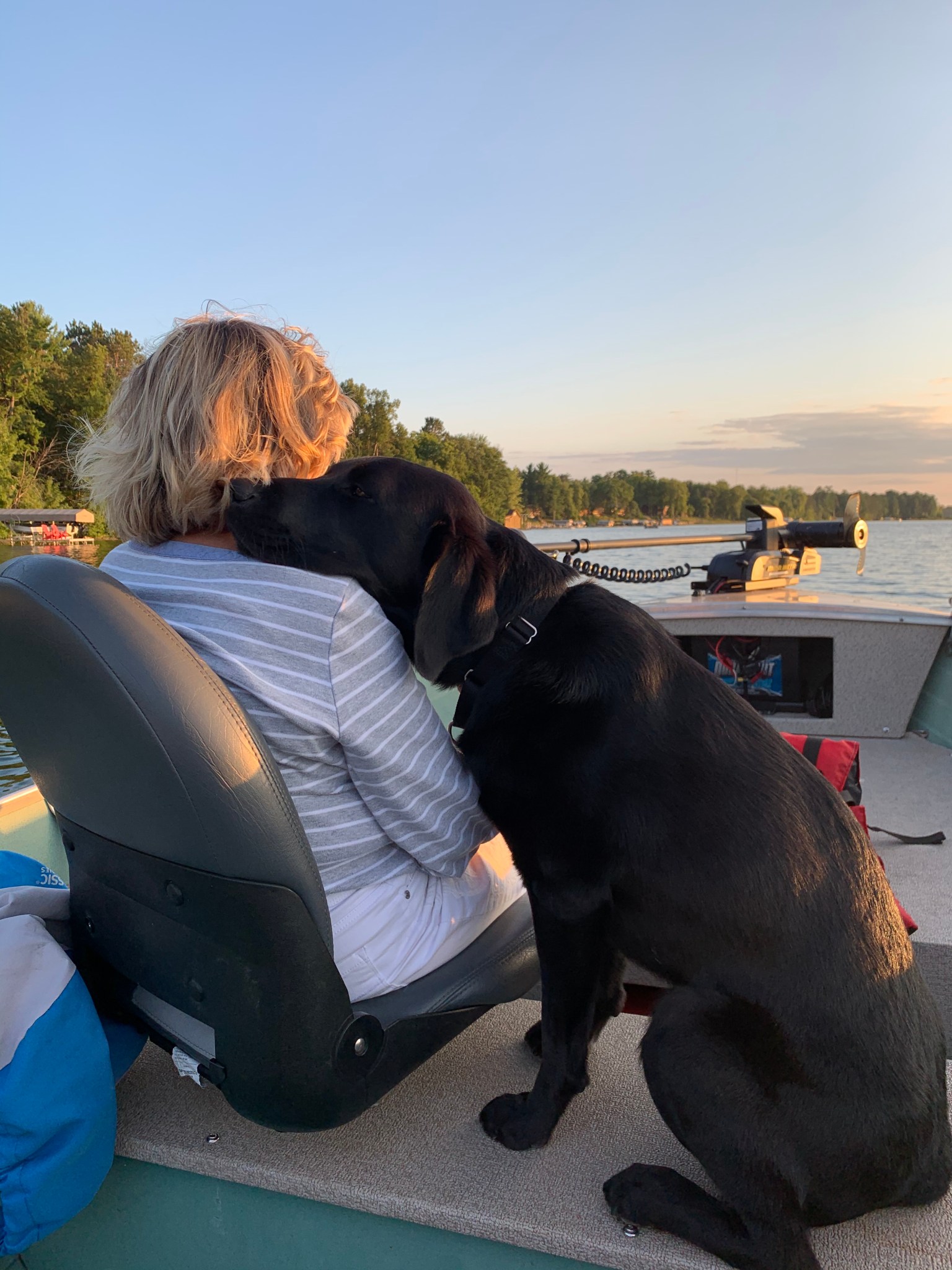 It hasn’t been all work. He enjoys tugging a toy, or I hide a toy and he finds the toy. He also enjoys cuddling in the big chair. When we are at the cabin, he enjoys boat rides, wading in the water and fetching floating rock toys.
 recipient of one of their hearing assistance dogs. So many people play parts in preparing the dogs for their assistance careers. It is a challenge to express the greatness of the gratitude. To the many people that participate; employees, volunteers, trainers and board members, I say THANK YOU!
 2 Bionic Ears